Passage 01 / Collection interface → accepted lot
Intake: What the Load Conceals
An intake specification turns an uncertain collection into a controlled industrial input. It also identifies the material that must not proceed.
Keep the collection boundary intact
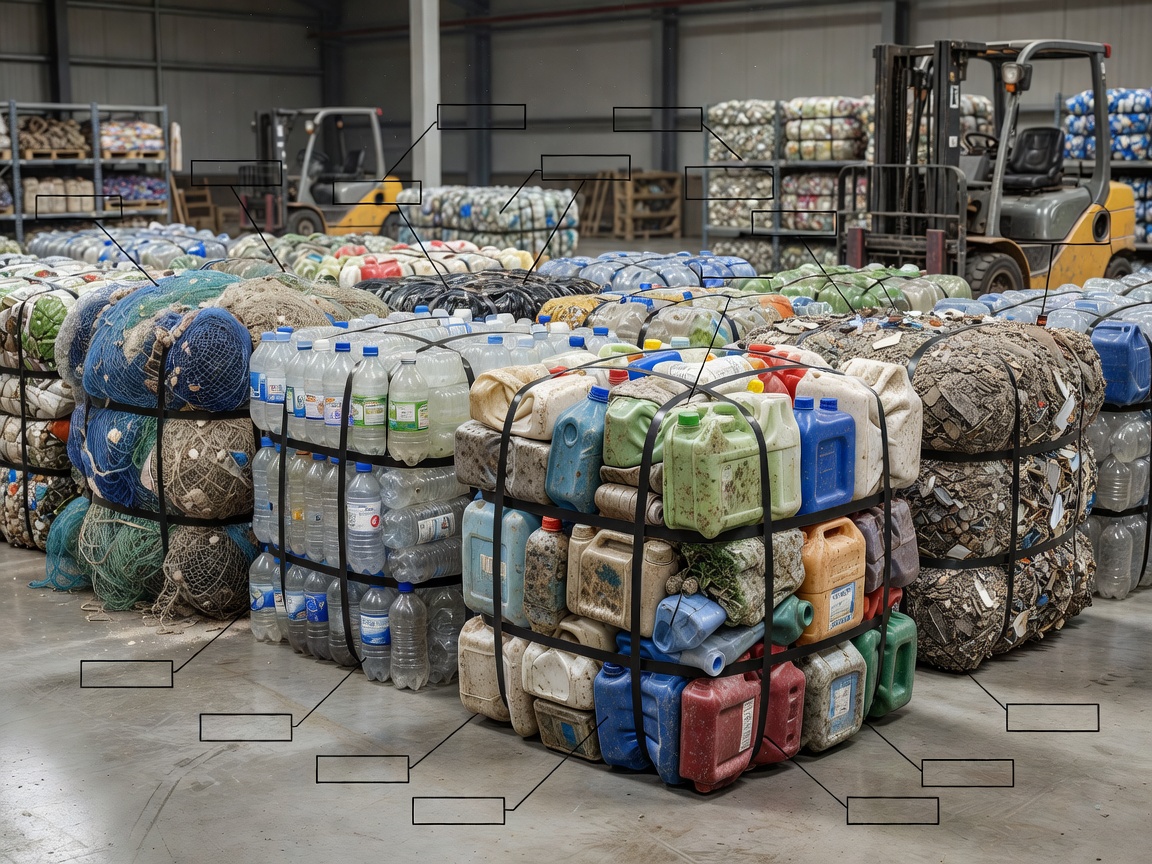
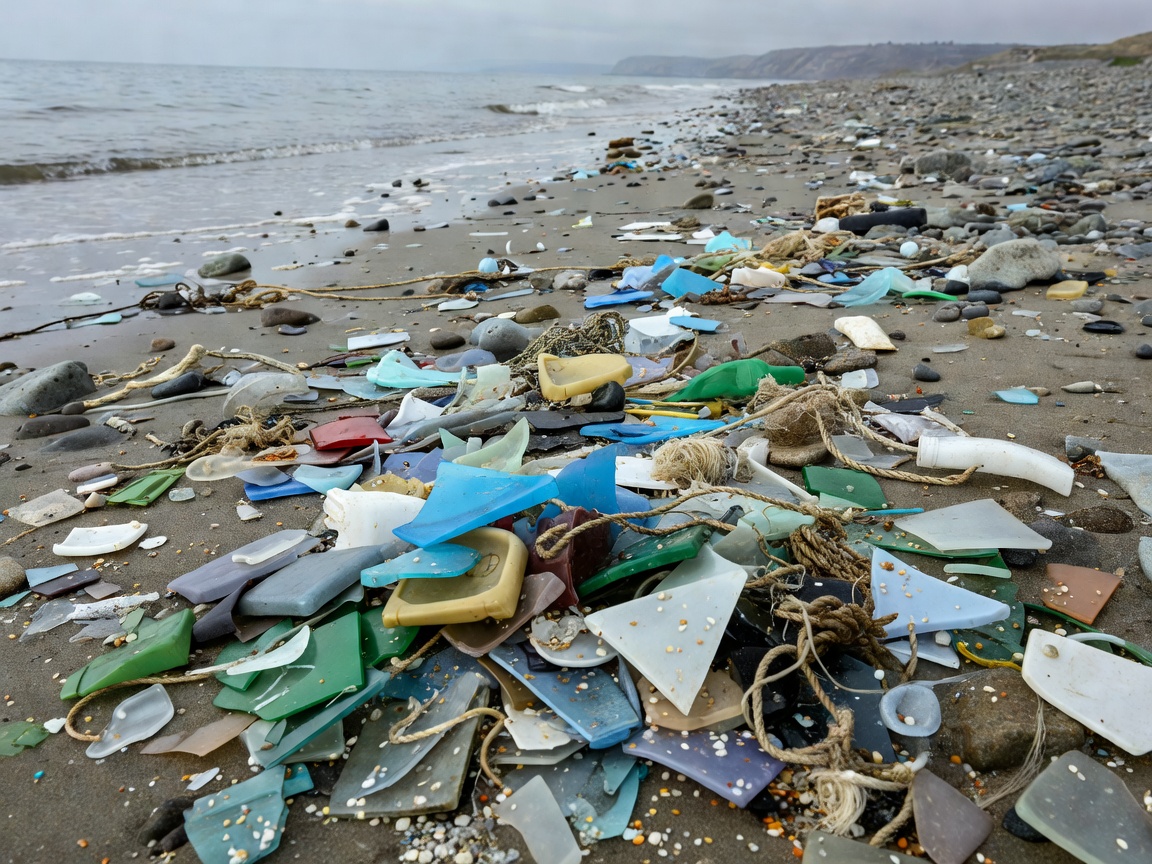
Marine plastic is not a single feedstock. A load may contain fishing gear landed through a port, litter recovered from open water, debris collected on a beach or waste intercepted before entering the sea. These origins imply different exposure histories and different documentary claims. They should not be merged under an ocean label simply because they enter the same yard.
At handover, record the collection location, date, collector, material description and lot identifier. Note whether weights refer to wet material, drained material or an estimate. Sand and retained water can make a collection total much larger than the polymer eventually available for manufacturing. If loads are combined, retain the relationship between original lots and the new storage batch.
Port reception arrangements also matter. The International Maritime Organization's MARPOL Annex V addresses garbage from ships, while local waste rules govern handling after landing. A recycling facility still needs its own acceptance controls; a lawful collection route does not establish polymer purity or product suitability.
Open the load before assigning a route
Visual inspection checks for obvious hazards and mismatches: pressurised containers, batteries, sharp metal, organic waste, oil contamination and materials outside the permit or equipment design. Nets and ropes can trap hooks or heavy fittings. Uncontrolled shredding of such a load can injure workers, damage machinery or introduce contamination into otherwise recoverable plastic.
Facilities need a safe quarantine area and an agreed procedure for rejected material. A rejection is not evidence that collection was pointless. It indicates that this facility cannot safely or reliably process that fraction. The next destination must still be lawful and documented, rather than hidden inside a nominal recycling total.
Sampling should reflect variability across the delivery. A clean surface layer is not representative evidence for a mixed bale. Operators may inspect multiple locations, separate suspicious fractions and compare the delivery with the supplier's description. The exact inspection plan depends on the source, load size and demonstrated consistency.
Appearance is not identity
Polyethylene, polypropylene, PET and polyamide behave differently during separation, drying and conversion. A net can contain several polymers, coatings and attachments. Colour is not a reliable identifier, and a resin marking describes the marked component rather than every material in the assembly.
Near-infrared sorting can identify many accessible polymer surfaces, but dark pigmentation, weathering, fouling and multilayer construction can complicate interpretation. Handheld spectroscopy or laboratory checks may help resolve uncertain fractions. Density tests provide useful clues, but overlapping densities and additives prevent them from acting as universal identification methods.
The practical output of identification is a sorting instruction: which components to separate, which fraction belongs together and which uncertainties remain. Preserving a clean nylon fraction can be more valuable than increasing the apparent tonnage of a mixed output that no buyer can consistently use.
Agree the gate before the delivery
A useful acceptance agreement names the target polymer, permissible non-target materials, moisture basis, packaging method and required source documents. It should also define how the parties measure a disagreement. Without shared test methods, one party's clean load can be another party's contaminated input.
For cross-border shipments, classification and destination controls require particular attention. The Basel Convention plastic waste amendments distinguish categories subject to different control arrangements. Calling a shipment recyclable does not by itself remove shipment obligations. Applicable national rules, permits and the actual composition must be checked by competent parties.
Procurement teams should ask for a mass balance from received load to sorted feedstock, not just an annual collection number. Rejected material, metal, sediment, moisture changes and storage movements explain why these figures differ. This first accounting boundary is essential to every later claim about recycling yield or recycled content.
| Check | Evidence to request | Why it matters |
|---|---|---|
| Origin | Collection records and lot identifiers | Supports a bounded source claim |
| Polymer | Sorting method and verification results | Determines the processing route |
| Contamination | Inspection and sampling procedure | Protects equipment and output quality |
| Mass basis | Wet or dry weight and measurement stage | Prevents misleading yield comparisons |
Evidence bench
- IMO: prevention of pollution by garbage from ships — collection and shipboard waste context, not product certification.
- Basel Convention: plastic waste amendments — international waste-shipment framework.
- PLASTIX — an operator's account of maritime-plastic recycling; verify individual material specifications separately.