Passage 02 / Accepted lot → prepared flake
Cleaning: Separating More Than Dirt
A washing line relocates contamination. Its performance must be judged at both ends: the prepared polymer and the water, fines and residues leaving the process.
Expose what the surface carries
Marine exposure leaves more than visible litter attached to plastic. Salt, sand, shells, biofilm, labels and oily residues may arrive together, but they do not respond to the same treatment. Before selecting a wash sequence, the operator needs to understand which contaminants are present and what the next machine can tolerate.
Coarse screening and manual removal can take out stones, metal and bulky organic matter before they damage cutting equipment. Size reduction then creates manageable pieces and exposes surfaces for washing. The sequence is not universal: heavily fouled gear may require pre-cleaning before cutting, while a cleaner rigid-plastic stream may enter a granulator earlier.
Shredding is a preparation step, not purification. It can distribute contamination more widely and create fine particles. Cutting systems therefore need containment, maintenance and recovery arrangements. A clean-looking flake is not automatically free of embedded contamination or unsuitable additives.
Match washing intensity to the material
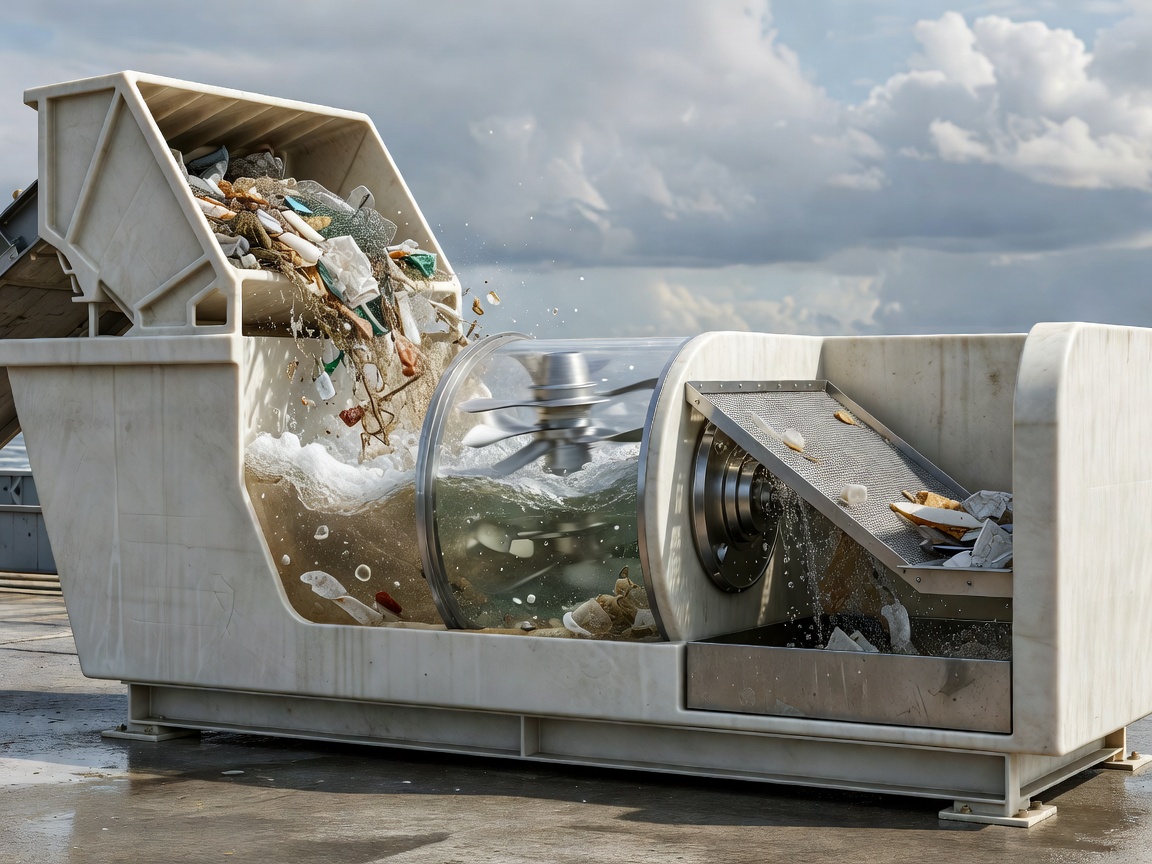
Friction washers use mechanical action and water to detach surface contamination. Hot washing, detergents or other controlled treatments may be useful for particular feedstocks, but they increase demands on chemical management, energy and wastewater treatment. Temperature and chemistry must be compatible with the polymer and any intended downstream application.
A good cleaning specification defines an endpoint rather than prescribing maximum intensity. Excess treatment can consume resources without creating a more useful output. Insufficient treatment can leave grit that wears equipment, organic contamination that causes odour or residues that interfere with conversion. Test results and operating experience should determine the balance.
Salt removal is relevant for marine-derived material, but it is not the only quality question. Rinsing can reduce soluble salts; it does not restore molecular weight lost through ultraviolet exposure or oxidation. Operators should distinguish a measured cleaning improvement from an unsupported claim that the material has returned to its original condition.
Use density without overreading it
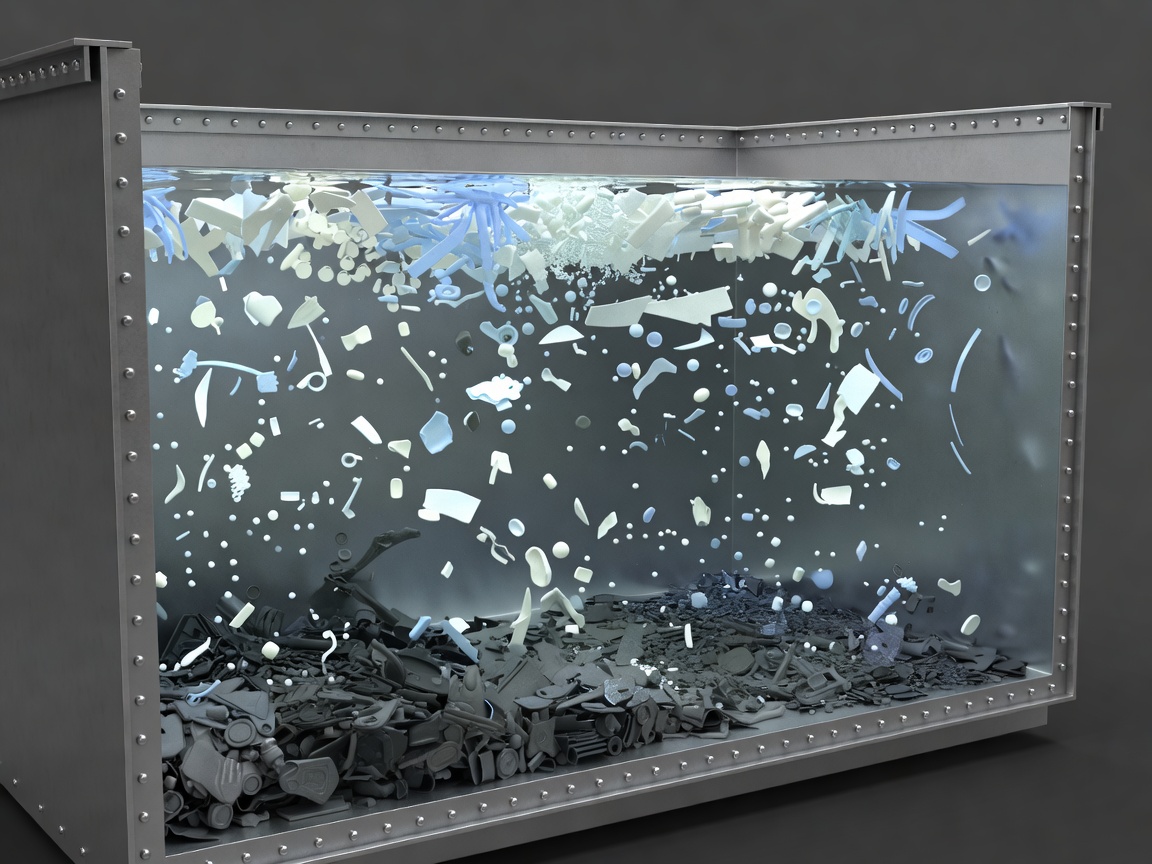
Sink-float separation exploits density differences between materials and the chosen liquid. In water, many polyethylene and polypropylene pieces float, while PET and many polyamides sink. This can produce useful fractions, especially after dirt and trapped air have been reduced.
It cannot solve every mixture. Filled polymers, attached components, foams, trapped air and variable wetting affect behaviour. Polyethylene and polypropylene often remain together in a floating fraction even when the intended product needs tighter composition control. A density split therefore needs verification rather than an assumption of purity.
Additional separation methods may include screens, air classification, metal removal and optical sorting. Each has a different operating window. The relevant question is which unwanted fraction it removes at the actual particle size and contamination level, not whether the facility owns an impressive list of machines.
Account for the water and the missing mass
Recirculating water can reduce fresh-water demand, but it concentrates suspended solids and dissolved substances unless the system removes them. Screens, settling, filtration and suitable treatment stages must be designed around the actual contamination. Sludge and captured plastic fines need controlled handling rather than discharge back into the environment.
Dewatering and drying prepare the washed fraction for conversion. Moisture limits depend on the polymer and processing route. Some polymers are particularly sensitive to moisture during melting, making drying performance a material-quality issue rather than merely an energy decision. Storage after drying must also prevent rewetting or cross-contamination.
A credible mass balance identifies recovered polymer, rejected fractions, removed sediment, fines, sludge and water-related weight changes. Reported recovery yields should state the basis used. Comparing wet intake with dried flake without explanation can make a sound cleaning process appear inefficient or make an inflated collection claim look impressive.
Procurement teams should request sampling methods, water-management boundaries and residue destinations alongside the flake specification. Those details reveal whether the line controls contamination or simply shifts it into an unreported stream.
| Operation | What it addresses | Important limitation |
|---|---|---|
| Friction washing | Loosely attached surface contamination | Does not reverse polymer ageing |
| Density separation | Fractions with different apparent densities | Overlapping densities remain a challenge |
| Drying | Residual moisture before conversion | Does not remove every contaminant |
| Water treatment | Captured solids and other water contaminants | Requires controlled residual disposal |
Evidence bench
- UNEP: plastic pollution — environmental context and the wider need to prevent releases.
- European Commission JRC: Waste Treatment reference document — industrial waste-treatment and emissions-control context.
- ISO standards catalogue — consult current polymer-specific sampling and testing standards rather than treating this guide as a test method.